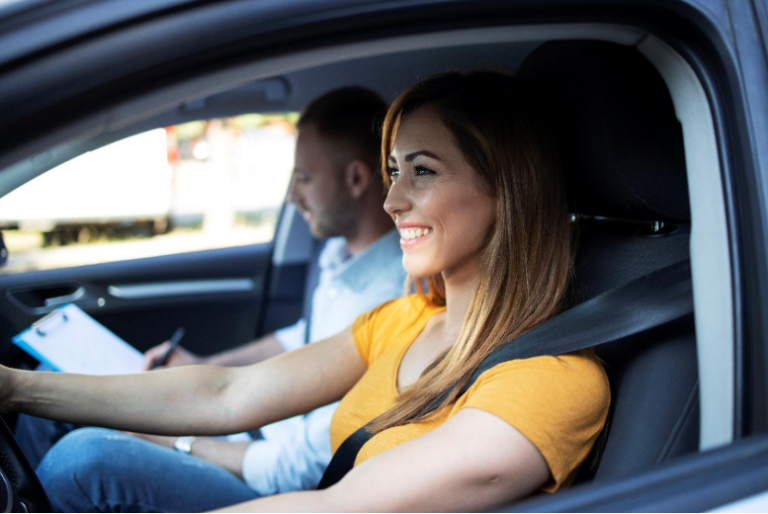
Knowing how to drive has become essential nowadays and manual driving lessons are especially designed to teach beginners how to operate a car in a safe and controlled way. Unlike automatic cars, drivers are required to handle both clutch and gears in manual vehicles, which can feel challenging if you are new to driving. These lessons focus on building confidence, improving coordination, and helping learners understand how a car responds to different actions. With the help of these lessons, students can learn essential driving skills that prepare them for real road situations and everyday driving.
Below are some of the common lessons people learn in manual driving.
Car Controls
Learners are introduced to the main control system of the car at the beginning of manual driving lessons. These include the accelerator, steering wheel, brake pedal, and clutch pedal.
The instructor explains how each control works and how they affect the movement of the vehicle. Understanding these basic controls is very important because it builds the foundation.
Clutch Control
Another most important part of learning manual driving lessons include teaching clutch control. The instructor teaches how to press the clutch fully and release it slowly while giving slight acceleration.
There comes a point where the engine begins to engage with the wheels called the biting point. Learning how to find and control this point helps you move the car smoothly and avoid stalling.
Moving Off and Stopping
Another important skill people learn is how to move the car and bring it safely to a stop. To move off, you are taught to press the clutch, select gear, and press the accelerator while releasing the clutch.
This requires coordination and practice. For stopping, you learn how to press the brake and clutch together in the correct order. Repeating this process helps learners gain control over the vehicle.
Gear Changing Techniques
In manual driving lessons, you also learn how to change the gears properly. The instructor teaches you when to shift gears depending on your speed and the engine sound.
Higher gears are used for faster speeds, while lower gears are used when starting or driving slowly. Learning how to change gears smoothly makes driving more comfortable and helps protect the engine.
Steering and Road Positioning
Learners are also trained in steering control and correct road positioning. Beginners are taught how to make smooth turns without losing control by holding the steering wheel properly.
In addition, you also learn how to stay in your lane, keep a safe distance from other vehicles, and use mirrors properly. These skills are essential for safe driving and help you stay aware of your surroundings.
Parking and Reversing
Parking is another important part of driving lessons. Beginners learn different types of parking such as parallel parking, reverse parking, and parking in tight spaces.
Instructors teach beginners step by step because it requires extra control and attention to reverse a car. Practicing parking improves your judgment of space and helps you handle the car confidently.